In my continuing effort to direct you away from my blog, I am compelled to note Bill Turkel’s follow-up to a post I referenced last week.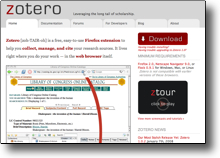 In this one he ponders our conscious creation of “islands of stasis” and why an anachronistic mode of research practise persists. More importantly his ‘punchline’ refers briefly to how to make use of tools, such as Zotero, efficiently to comprehend our private research processes. He muses “that measurements of your Zotero bibliography will be most useful to the extent that they are fed back into your research in a useful way.” This is very powerful observation and activity, but also dangerous.
Zotero provides a number of integrated functions to accomplish this measurement, most dramatically through integration of SIMILE’s Timeline tool. You can quickly visualize the context of your exploration, and potentially discover patterns in the return that you may have otherwise missed. These can function as corrective, or open up new directions that you were not consciously exploring. The unfortunate pitfall (I mention this as its all too real for me) is extended navel gazing and self-reflection attempting to find a mythical optimal or utopian tool or tool set. Zotero offers an API that is accessible and powerfully compelling. Too much reflection of the process can be a bad thing, but none at all is a far greater threat to success.
Turkel’s realizations are honest and prescient, but I expect suspect in many circles. The reality is that many techniques that he identifies are not right for all and how one does research is a very individual act. Increasingly however, the individual act is drawn into the collective in radical new ways that reflect a broad reappraisal of why we do what we do. Asking that big question is always a dangerous, but necessary act.