

I attended a lively and effervescent talk by Marianne P. Fedunkiw at the History of health and Medicine Unit. Dr. Fedunkiw presented her 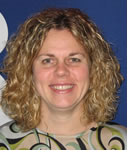 work with the diary/scrapbook of Dr. Dorothea Maude, a rather atypical English medical doctor during the early twentieth century. Dr. Maude was active in the Balkan Wars of 1912-14 and then during the First World War in this same area. The talk today was on the topic of the challenges that arise from using diaries as a historical source.
Dr. Fedunkiw’s three main comments to this are that:
- We need diaries such as these to attempt to tell the story of the unofficial. The hospitals and medical services associated with Maude were private and do not emerge in any official war or medical records;
- Private records are tough to use, as they are just that – private- and thus less accessible and in the case of Maude get sparser attention when the action heats up and there might even be more we would like to know. again, the lack of official or administrative records that might maintain some sense of continuity or uniformity of coverage is a big challenge.
- The obvious question of voice and the need to identify bias. Moreover, the sense, expressed by Dr. Fedunkiw that people write diaries for them to be read at some point, thereby leading to the question of what the motivation is behind their record.
The product of Dr, Fedunkiw’s work in this area is a recent article: “Women Physicians Serving in Serbia, 1915-17: The Story of Dorothea Maude” McMaster University Medical Journal, 4:1, 2007, 53-57.
There is a very important secondary story in the exploits of Dorothea Maude and that is the ability of a female doctor to be able to practise in a place such as Serbia during wartime as the extraordinary circumstances relaxed gender and class biases that prevent ed her from carrying out the same activities in official British corps.